Effortless Meditation · a self-paced video course: Learn to meditate with the busy mind you already have. As vast as the sky, as near as your breath.
You do not have to clear your mind or sit still for an hour. In 5 video lessons, Daniela and I show you how to let the mind settle on its own, a few minutes at a time, in a full and busy life.
Drawn from many teachers, with gratitude to Lorin Roche
Research-informed · NCCIH · JAMA · AHA
Sound familiar?
You tried to meditate, and your mind kept talking.
Most of us were handed 1 instruction: sit still and clear your mind. The thoughts kept coming, we decided we were bad at it, and we quit. The day went on running in fifth gear.
Daniela sees it in our yoga and Qigong teacher trainings. When we reach the meditation part, many yogis and spiritual seekers are scared of it, because they really think 'I can't meditate because my mind is too busy.'
That instruction was written for monasteries. You have a job, a family, a full calendar and a mind full of the day's list. A mind like that is engaged in your life, with care. It deserves a practice built for that life.
'Meditation is a letting go into a process that you already know.'Christopher, Lesson 1
I know this from the inside. In my early 20s I went to my first Zen meditation and could barely sit still. Anxiety, depression and addiction dominated my life then. I still remember the chaos coming down just a little bit, from fifth gear to about four and a half. That little bit of clearing is where this practice began for me. Christopher
The Approach
Rest for the mind, the way sleep is rest for the body.
You cannot force sleep. You allow it. Meditation is the same. You learn small skills that let the mind settle on its own.
Thoughts are welcome
There is no monkey mind. A full mind is engaged in a full life. You learn to let thoughts come and go without a fight.
Nothing to force
No straining, no perfect posture. Comfortable and supported are the only 2 requirements. The rest is allowing.
A few minutes, often
A short pause works like a micro-nap. The benefit builds the more often you return.
What is Effortless Meditation?
A gentle way of meditating where you let the mind settle on its own instead of forcing it to go quiet. You come in through the breath and the senses, learn a few small skills, and practice for a few minutes, several times a day. Read the full answer from Christopher.
A little about us
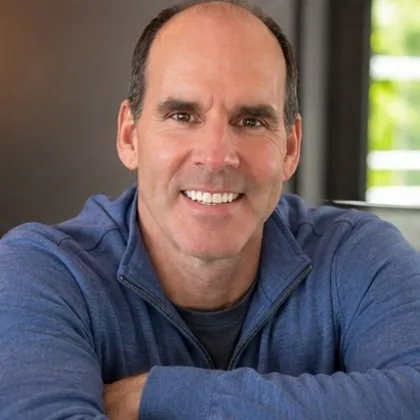
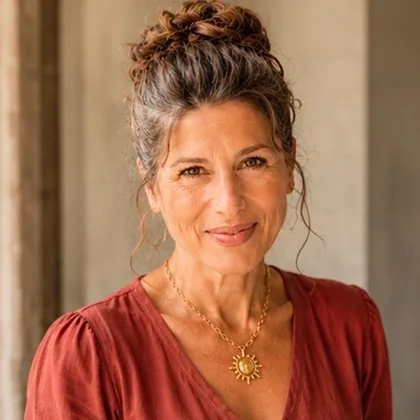
Meet Christopher & Daniela
5 minutes on who we are, how we teach, and why meditation can feel effortless.
Watch
Watch 3 clips from the course
Real moments from the lessons, as they are in the course. Press play on any one.
The list still shows up when you sit. Now you know how to let it pass.You rest for 3 minutes in the open air before the next thing.You stop saying 'I am not a meditator.'
The Course
5 lessons. 4 bonus practices. 1 effortless path.
An effortless approach to meditation for busy, full lives. 5 core lessons and 4 bonus practices, a printable Practice Companion, 5 reference cards and the Myth-Busting guide. Watch at your own pace, and keep it for life.
3 steps, at your own pace
1Begin the course. $47, 1 payment, and Lesson 1 opens right away.
2Practice a few minutes, a few times a day. Keep the So Hum card where you sit.
3Return whenever you like. The lessons and printables are yours for life.
Try it for 7 days. If the course is not right for you, email us and we refund you in full.
What students say
What students say about learning with Christopher and Daniela
From students of our live meditation classes, and of our Qigong and teacher training programs.
I tend to just have an overactive mind, and it's very frustrating for me to meditate. But, I don't know just something about this that I was able to go deeper.
Mari, meditation class student
I came out of that so... Deeply calm and settled.
Kim, meditation class student
I felt an immediate shift towards inner peace, a calm body and softened heart.
Kat B.
You won't find more experienced, kind-hearted, ethical and professional teachers of yoga, Qigong, and meditation.
Mayya S.
My experience with Great Energy has been life changing. Their online classes and workshops are well thought out, sincere and accessible for all.
Lorna R.
The quality of the education and the knowledge of the teachers is unmatched.
Cheryl P.
Your teachers
Your teachers, Christopher Grant and Daniela Hess
Educators and practitioners for 30 years, teaching meditation for full lives.
Christopher Grant
Co-founder of Great Energy and its lead Qigong teacher. Christopher has practiced meditation for more than 35 years, including Sahaj Samadhi meditation with Sri Sri Ravi Shankar and silent Vipassana retreats in the tradition of S.N. Goenka. He teaches the movement of attention, the breath and the mantra in plain, unhurried language.
Daniela Hess
Co-founder of Great Energy and a functional wellness coach for women in midlife, Daniela co-teaches our yoga and Qigong teacher trainings, including the meditation teaching. She holds meditation as a way to greet, sort and integrate your inner world. She brings warmth, the felt body, and deep care to every practice.
A space you will want to be in.
With gratitude
Many teachers, one simple practice
Effortless Meditation grew from many teachers and traditions over 30 years of practice. Among them we hold special gratitude for Lorin Roche, whose Radiance Sutras remind us to celebrate the senses and the ordinary joy of being alive, and for his wife, Camille Maurine, whose Meditation Secrets for Women we also recommend. Learn about Lorin Roche.
What the research says
Gentle, and grounded.
A short, honest look at the evidence, with links to the sources.
Anxiety and mood
A 2014 meta-analysis of 47 trials in JAMA Internal Medicine found moderate evidence that meditation reduces anxiety and depression.
For a deeper, personal start, meet privately with Christopher and find the practice that fits you, shaped entirely around your life. 3 sessions by video, recorded to keep.
You do not have to stop thinking, and you do not have a monkey mind. Thoughts are part of the practice, not a sign you are doing it wrong. You learn a few small skills that let a thought come and go without a fight, and the mind settles on its own. A full mind is a mind engaged in a full life.
How long should a beginner meditate?
Clock time is not the point. A few minutes, several times a day, changes more than one long, effortful session. Treat it as a short rest you return to rather than a task to finish. As it becomes easy, you will reach for it on your own.
Do I have to clear my mind?
No. Clearing the mind by force is the tiring version most people quit. Here you rest your attention on something simple, the breath at the tip of the nose or a mantra, and the noise quiets on its own. The moment you notice you have drifted and come back is the practice itself, not a failure of it.
What posture should I use, and can I lie down?
Comfortable and supported are the only 2 requirements. A chair with your feet on the floor, a cushion, or lying down all work, eyes open or closed. There is no perfect posture to earn first.
Is it normal to fall asleep while meditating?
Yes, and it does not mean you had a bad meditation. If you were tired, your body took the rest it needed. Christopher often calls a meditation a micro-nap for this reason. If you would rather stay alert, sit a little more upright or practice earlier in the day.
How soon does meditation start working?
Many people feel a little more settled after their first practice, calmer and less pulled by the next thought. The deeper change comes from returning often. Short and frequent does more than long and occasional.
When is the best time of day to meditate?
The best time is one you will actually keep. Many people like the edges of the day, first thing and before sleep, with short pauses in between, at a desk or in the car before walking inside. You are building a calm you can return to, not a slot on the calendar.
I have a lot of anxiety. Is this for me?
Then you are exactly who this is for. You are not asked to feel calm on command or to push a feeling away. You learn to welcome what is here and let your attention rest. Consider an anxious mind an invitation to pause and grow curious, not proof that you cannot do this.
Is this religious?
No. The practice draws on the Radiance Sutras and many teachers, with gratitude to Lorin Roche, and it is offered as a practical, non-dogmatic skill for a full modern life. You do not have to believe anything. You try it and notice what happens.
A few minutes, several times a day, changes your day.
Or the day keeps running in fifth gear, the list keeps setting the pace, and you go on telling yourself you are not a meditator. Begin the course today, with a 7-day money-back guarantee, or start with the free 12-minute practice.